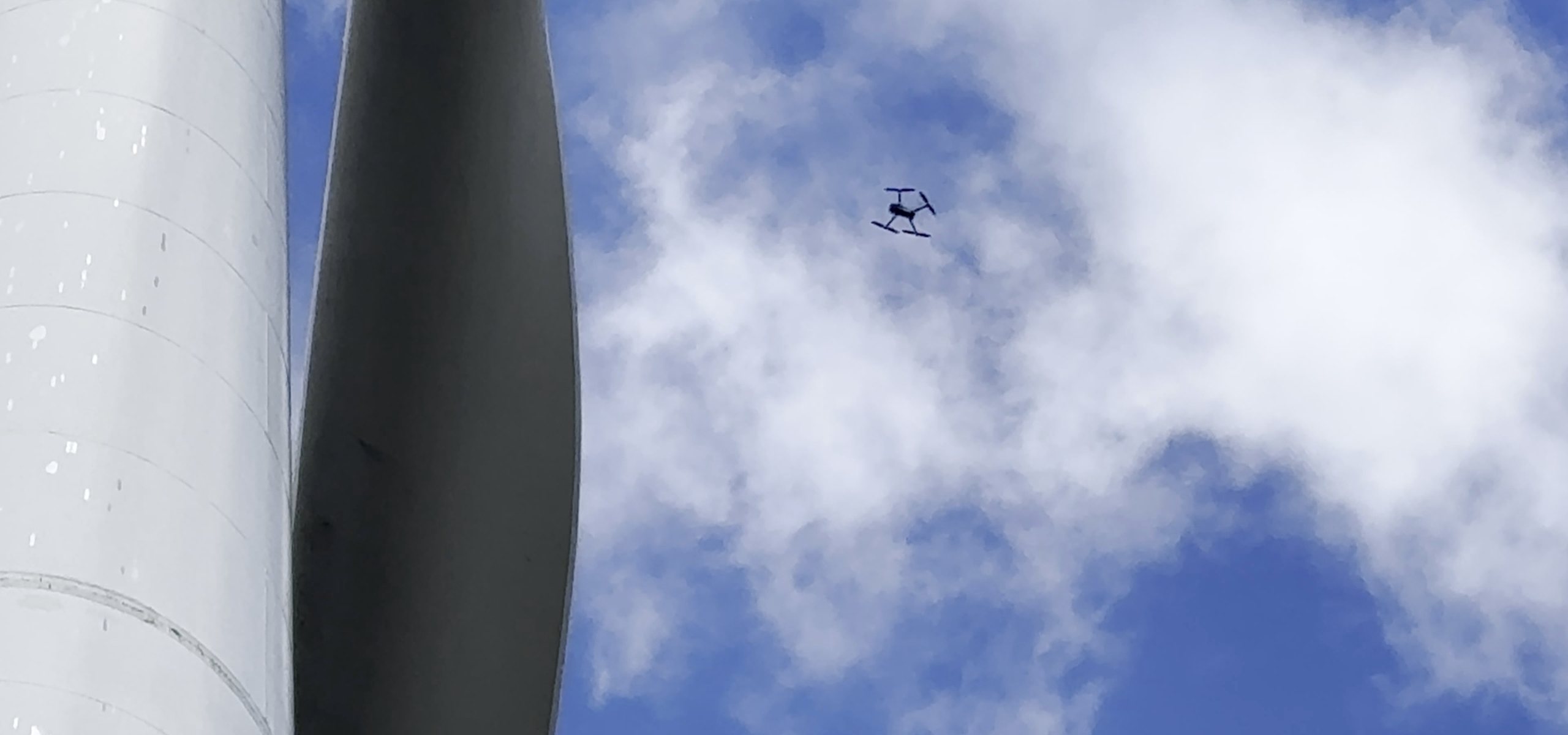
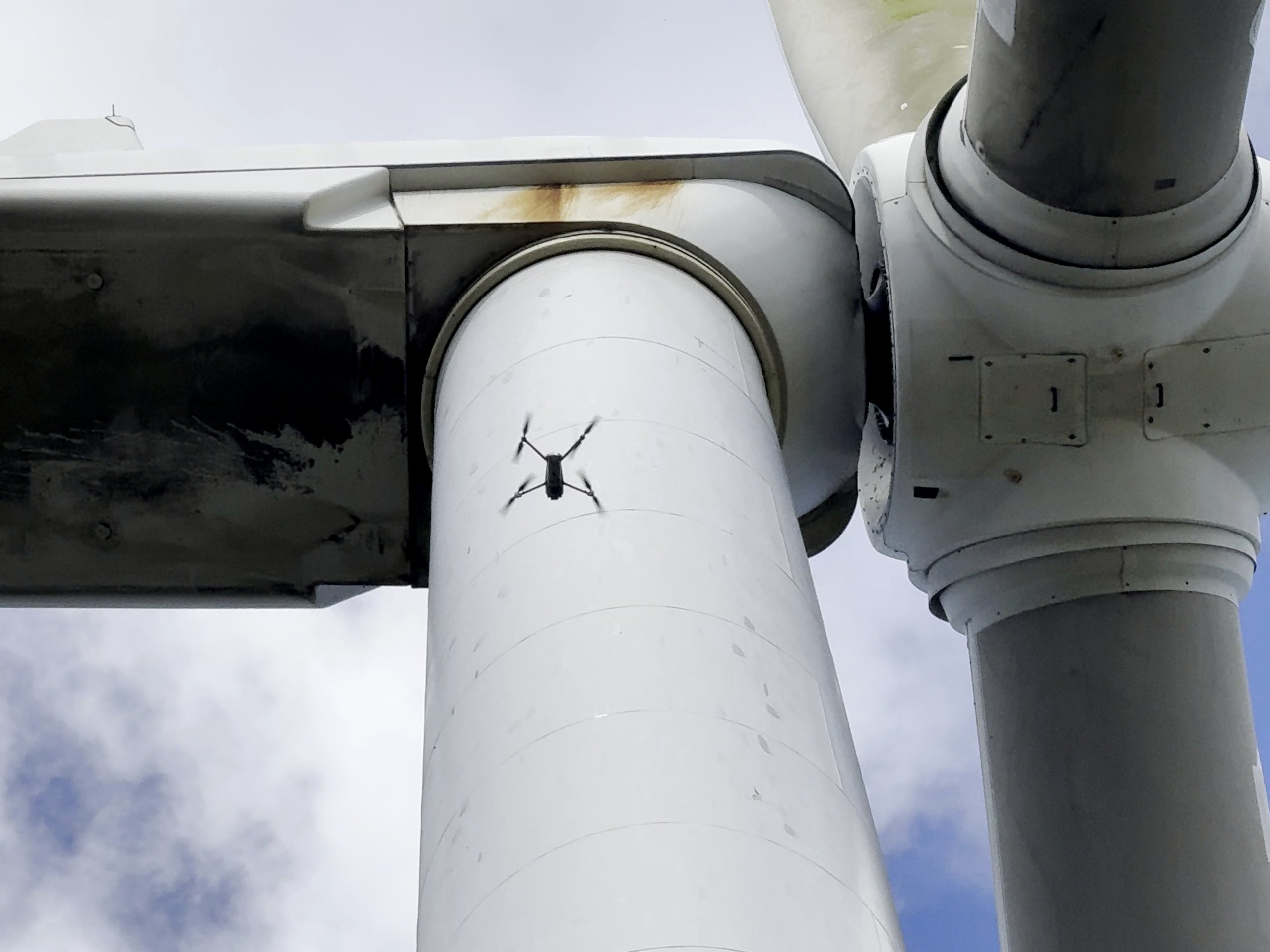
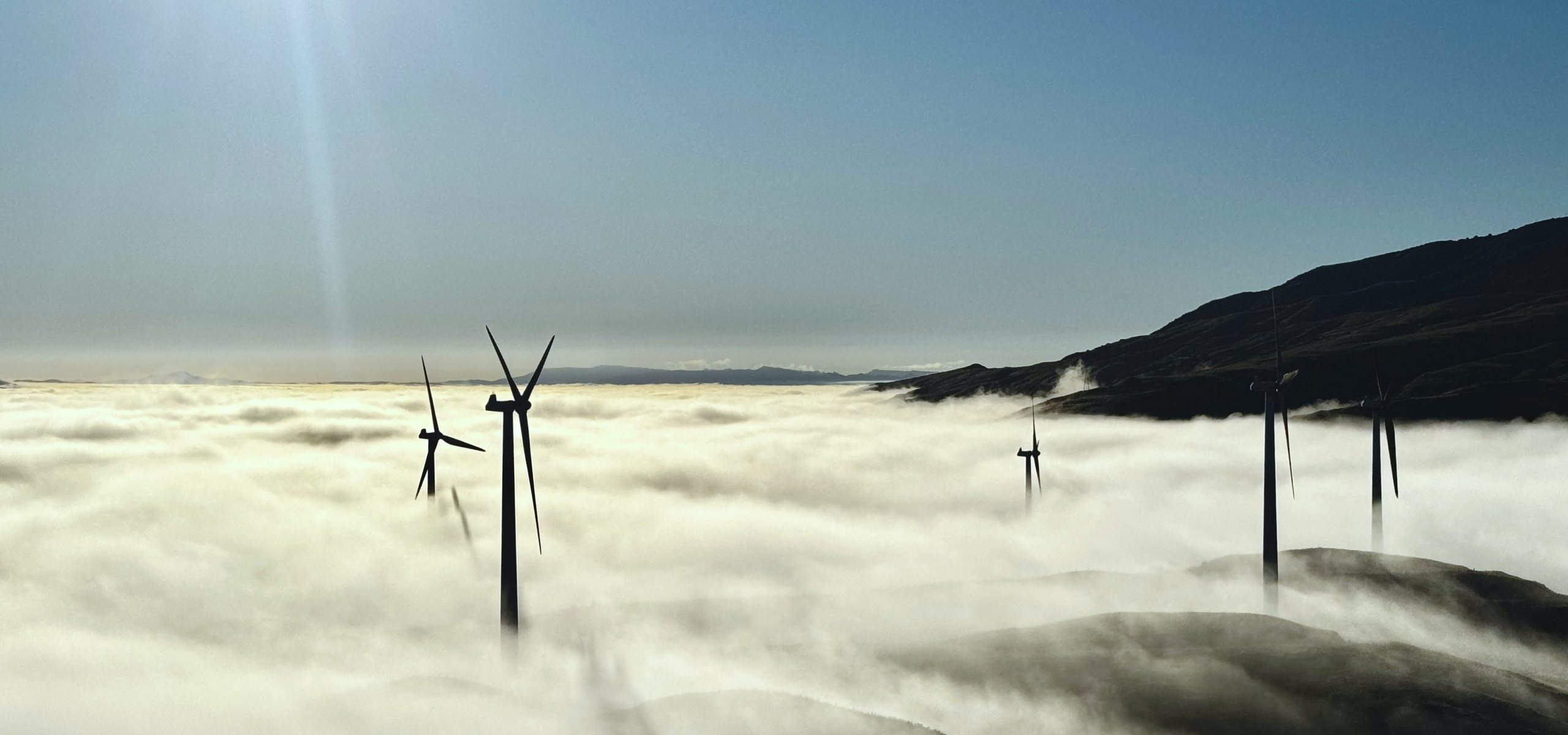
RPAS in flight beside a wind turbine tower
South Pacific Wind · Pacífico Sur Energía
RPAS (drone) technical inspection

Every asset, inspected.
Every finding, documented.

RPAS inspection and condition analytics for power generation assets in Argentina.

Scroll
Why inspect

Knowing the condition of your assets is the foundation of an efficient O&M strategy.

South Pacific Wind combines autonomous RPAS image capture, AI-assisted damage analysis and an inspection data management platform. The result is a complete view of fleet condition, decision-ready reports and a record that stays comparable campaign after campaign.

What the operator gets

Five concrete outcomes from every inspection campaign, from the first turbine to fleet-wide comparison over the years.

  1. 01

    Detailed information on every component

    High-resolution images covering 100 % of the surface, referenced by component, zone and side. Every finding is documented, measured and classified.

  2. 02

    Lifetime record per component and per fleet

    Each component builds its own file over the life of the asset. The information is not lost when contractors change or years go by.

  3. 03

    Trend analysis and benchmarking

    The evolution of each damage between campaigns, recurring patterns by model, by position in the site and by turbine. Objective comparison, based on measured records.

  4. 04

    Repair prioritisation and preventive measures

    Repair scope defined on the basis of severity and progression. Interventions planned within the right maintenance window.

  5. 05

    Lower O&M cost and recovered production

    Timely intervention before a minor damage becomes a major repair, and detection of aerodynamic losses that affect annual energy production.

Autonomous capture

Complete coverage. Minimal downtime.

0%
of each blade surface documented in high-resolution images
≈0min
of turbine downtime for a complete inspection of its three blades, in suitable flight conditions†
0blades
in a single autonomous flight over predefined routes, repeatable in every campaign

† Reference time with the turbine operational, surface wind up to ~6 m/s and no precipitation. Campaign planning accounts for the site's weather windows; in Patagonia that planning is a central part of the service.

The process

From flight to report, in six steps.

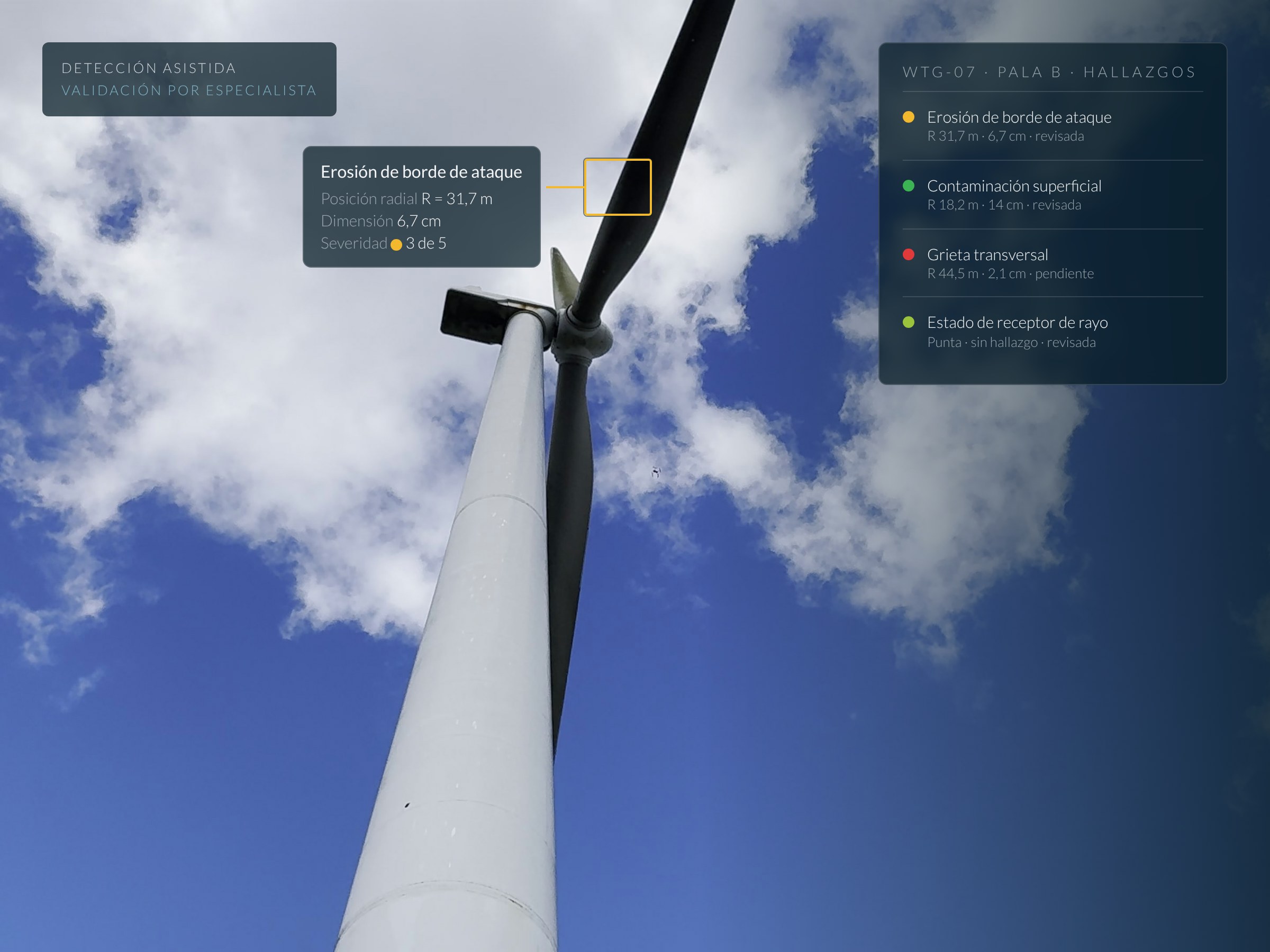
Illustrative diagram: annotation of a leading-edge finding, with radial position, dimension and severity classification.

  1. 01 · Capture

    Autonomous flight, full coverage

    The RPAS follows predefined flight routes around each component and captures high-resolution images with position metadata. The same route is repeated in every campaign, which makes results comparable.

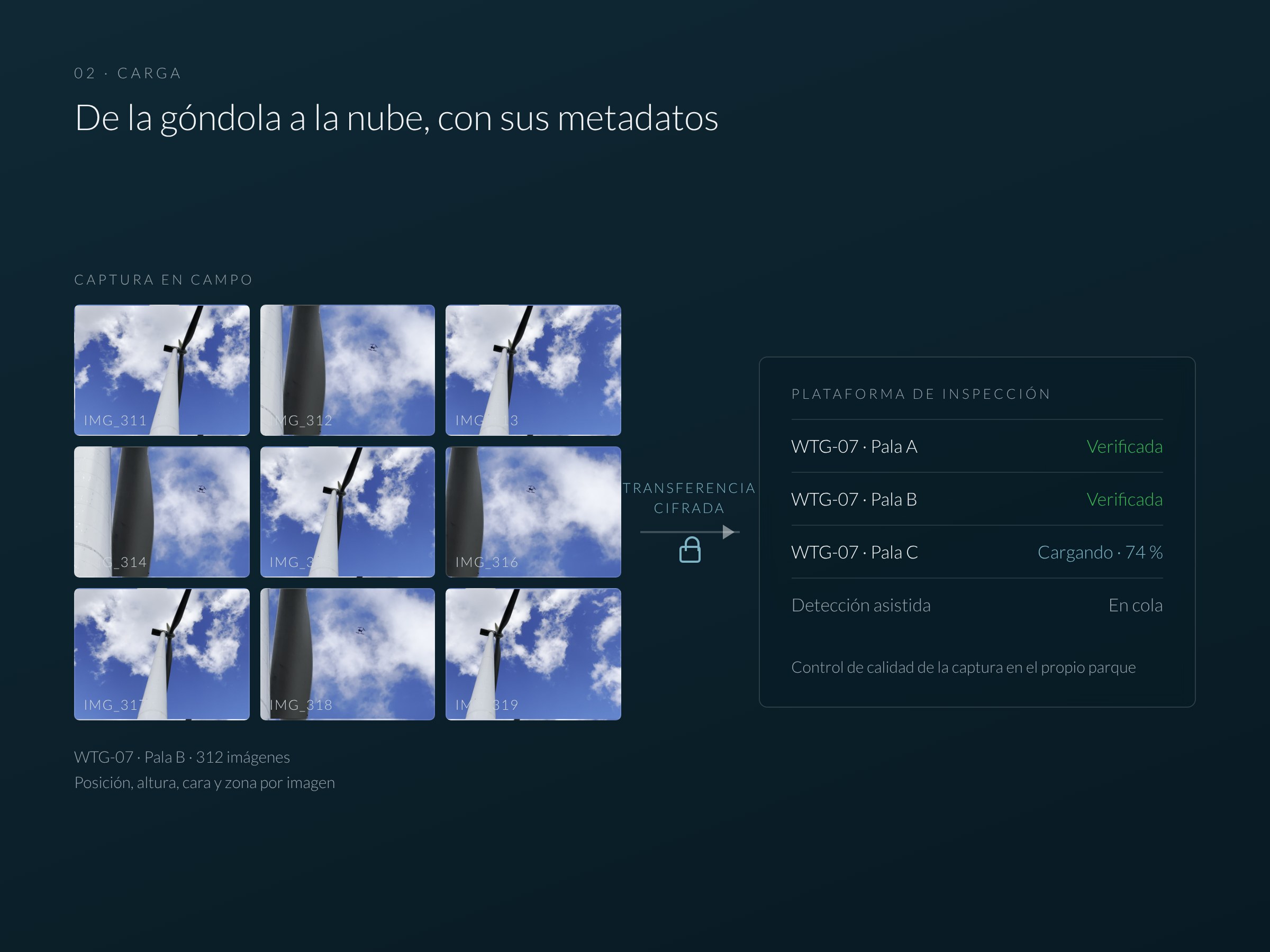
  2. 02 · Upload

    Secure data in the cloud

    After each turbine, images and metadata are securely uploaded to the platform, ready for analysis. The operator can verify capture quality on site.

  3. Illustrative diagram: annotation of a leading-edge finding, with radial position, dimension and severity classification.
    03 · Annotation

    AI-assisted detection, validated by specialists

    Image analysis algorithms identify and delimit damages; every annotation is reviewed, corrected and approved by specialists in a browser-based interface. No report leaves without human review.

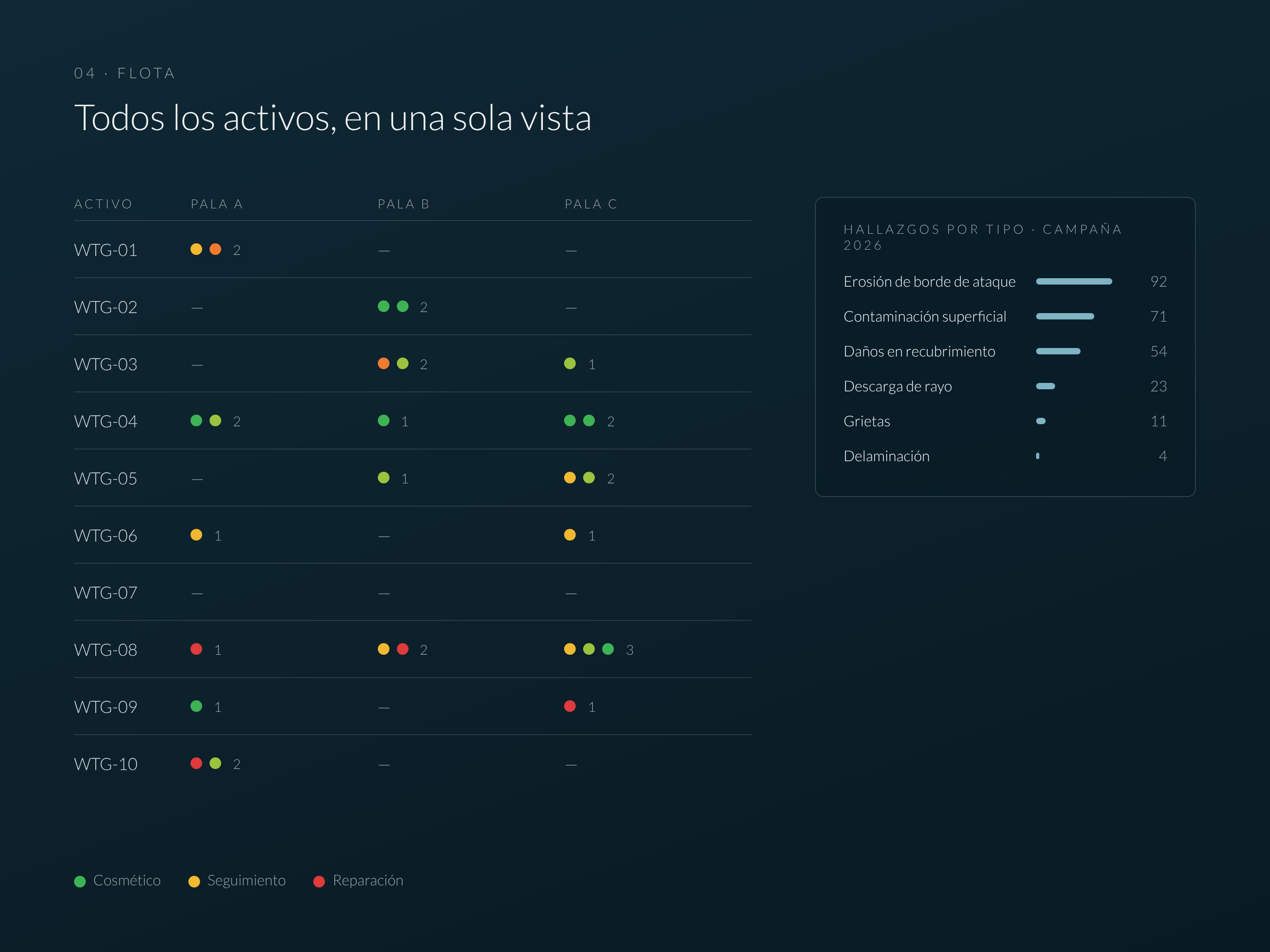
  4. 04 · Fleet

    A single view of fleet condition

    Every component of every asset in one place. Filters by damage type, severity, component and asset reveal patterns a single inspection cannot.

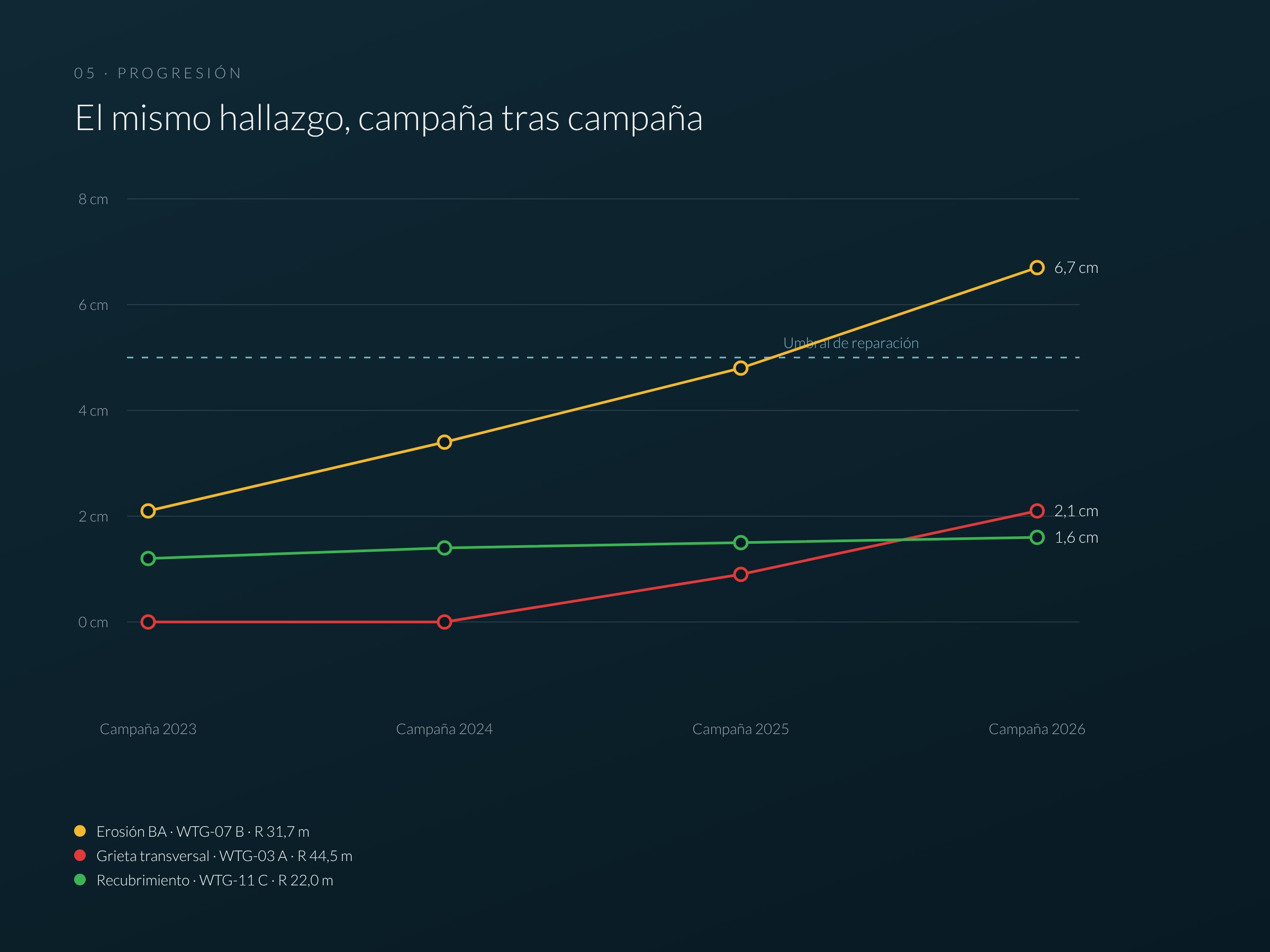
  5. 05 · Progression

    Damage evolution over time

    Each finding is linked to its equivalent in previous campaigns. Damage progression supports a well-founded decision on when to repair and when to wait.

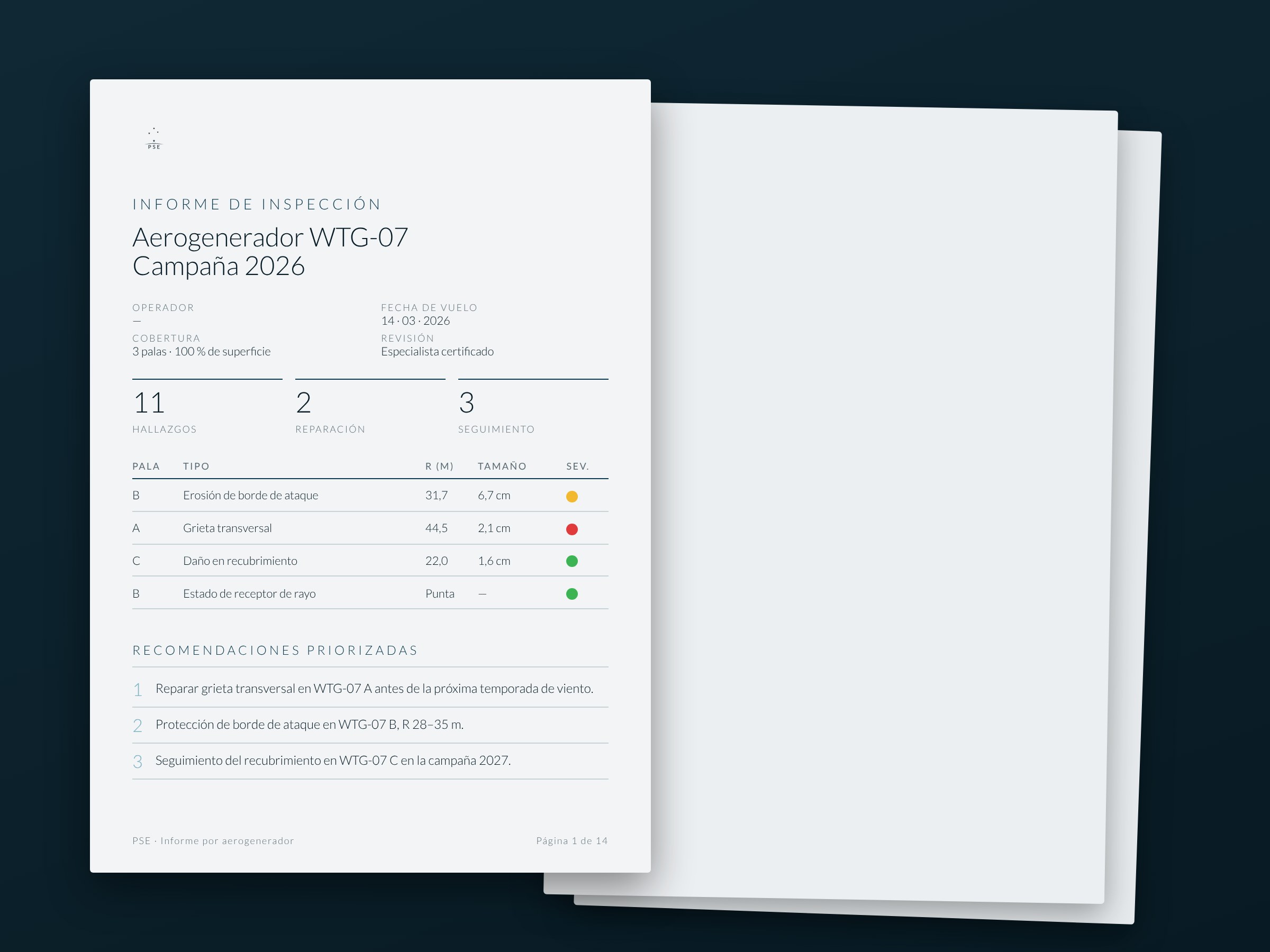
  6. 06 · Report

    Reports and campaign management

    Per-turbine and per-farm reports generated from the platform, with prioritised repair recommendations. Campaign planning and follow-up from start to finish.

In the field
Every component, documented.
Every campaign, comparable.
What is detected

Every finding, classified by severity.

High-resolution visual inspection identifies and tracks over time the damage types that define asset maintenance.

  • Leading edge erosion
  • Cracks
  • Delamination
  • Lightning strike damage
  • Lightning receptor condition
  • Impact damage: birds, hail, objects
  • Detached aerodynamic add-ons
  • Surface contamination
  • Previous repairs
  • Manufacturing defects
CosmeticCritical
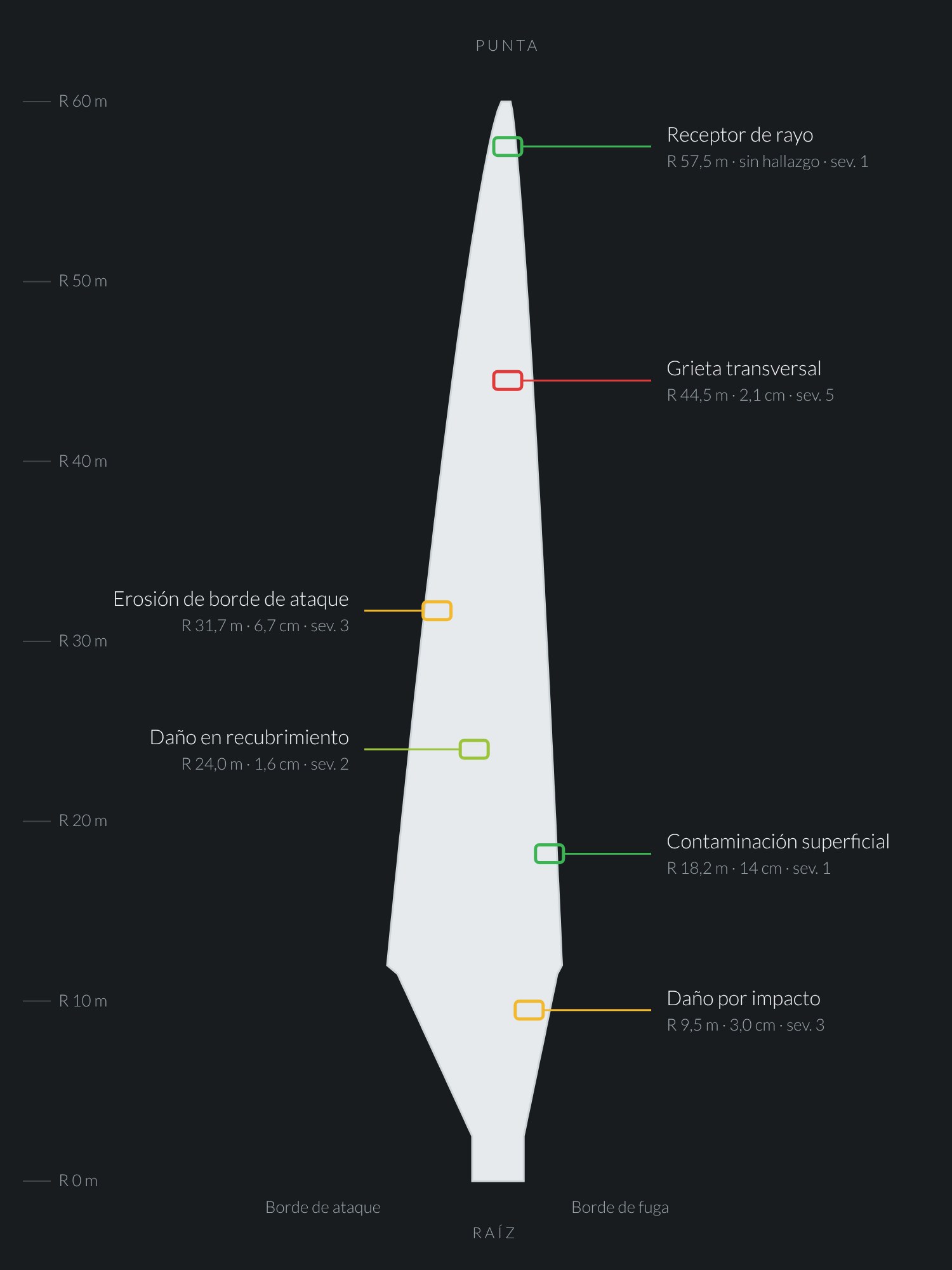
Illustrative diagram of a blade findings map
Illustrative diagram of a blade findings map: each damage with position, dimension and severity.
Service models

Three service models. One standard.

From a single campaign to continuous fleet monitoring, the scope adapts to the asset and to the stage of life of the wind farm.

Model 01

Turnkey inspection campaign

Planning, coordination with the operator, field capture, analysis and reporting per turbine and per wind farm.

  • Campaign plan and operating permits
  • Complete capture and annotation
  • Report with prioritised recommendations
Model 02

Inspection with platform access

Capture and annotation, plus O&M team access to the platform to consult images, findings and fleet filters.

  • Platform access for the term
  • Original and annotated images
  • Report export
Model 03

Fleet monitoring programme

Periodic campaigns with damage progression analytics, fleet reports and updated repair recommendations.

  • Annual or semi-annual campaigns
  • Damage progression between campaigns
  • Fleet report and repair plan

Inspections with a specific purpose

  • End of manufacturer warranty
  • Technical due diligence in asset transactions
  • After weather events or lightning storms
  • Verification of completed repairs
  • Baseline at the start of an O&M contract
  • Follow-up of specific damages under observation
Who it serves

The same information, four different decisions.

Operators and owners

Maintenance planning based on the real condition of the assets, repair prioritisation and fleet traceability over the years.

OEMs and service contractors

Systematic inspections within service contracts, end-of-warranty documentation and transparency towards the end customer.

Repair and maintenance companies

Precise prior diagnosis to scope the work, and documented verification of the repair once completed.

Investors and insurers

Independent assessment of asset condition in transactions, financing and claims.

The company

Operational experience built in New Zealand. Based in Patagonia.

South Pacific Wind grows out of years of work at height and RPAS inspection of wind turbines for New Zealand's leading generators, under the rules of that country's civil aviation authority. That experience now operates from Villa La Angostura, Neuquén, within operating distance of Argentina's main wind farms.

A defined method. Predefined flight routes, documented safety procedures and human review of every report. The same way of working at every wind farm.

Inspection technology. Swiss-developed inspection platform: autonomous capture, image analysis and blade data management used by operators and OEMs across Europe, the Americas and Oceania.

Contact

Let's talk about the condition of your assets.

A trial inspection on one turbine lets you assess capture quality, the annotation process and the resulting report before planning a campaign.

Management
Emanuel Rodriguez
Director of Operations
emanuel.r@pacificosurenergia.com
Email
contacto@pacificosurenergia.com
Base
Villa La Angostura, Neuquén
Argentina
Phone
+54 9 2944 907126 (AR)
+64 21 0814 6310 (NZ)